
Social media has become the primary lens through which people discover, learn, and shop.
Think back to the early days of the internet. Social media used to mean updating a status on Facebook, customizing a MySpace page, or sharing a quick tweet. It was a side activity — something you checked after the "real" parts of your day were done.
Fast forward to today, and social media is no longer just a digital album for photos or a way to catch up with old classmates. It is the backbone of global communication, digital commerce, news distribution, and personal branding. For many people, it has quietly become the first place they check in the morning and the last thing they scroll before sleep.
Whether you love it, hate it, or fall somewhere in between, one thing is certain: social media shapes how we think, shop, work, and connect. It influences what products we trust, which news stories we believe, and even how we measure our own success against the lives of others.
In this article, we'll dive deep into the modern social media landscape, its impact on society and business, and actionable strategies you can use to make the algorithms work for you instead of against you. By the end, you'll have a clear, practical framework — not just theory — for showing up online with purpose.
The Shift: From Connection to Content Consumption
Social media has evolved through three distinct eras, and understanding them helps explain why old-school tactics — like simply posting on a schedule and hoping for the best — no longer work the way they used to.
Focused on connecting with people you already knew. Your feed was your friend list — nothing more, nothing less.
Centered around feeds, likes, follower counts, and viral posts. Reach depended heavily on how many people followed you.
Driven by powerful AI algorithms that serve content based on interest rather than who you follow (think TikTok, Instagram Reels, and YouTube Shorts). Your follower count matters far less than the quality of a single video.
Today, platforms operate more like entertainment engines and search engines combined. People don't just use social media to chat—they use it to research products, learn new skills, follow news, and make buying decisions. This is why a small, unknown account can suddenly reach millions of people with one good video, while a large account with a stale content strategy can quietly lose relevance.
By the numbers: Businesses now recognize video isn't optional — 91% of companies use video as a core marketing tool in 2026, up sharply from just 61% a decade ago. Short-form video alone accounts for 58% of all time spent on social platforms worldwide. (Source: Wyzowl Video Marketing Statistics)
Understanding the Algorithm: What It's Actually Optimizing For
Most creators treat "the algorithm" like a mysterious black box, but its logic is fairly simple: every platform wants to keep people watching for as long as possible, because attention is what they sell to advertisers. That means the algorithm rewards content that keeps people from scrolling away — strong hooks, fast pacing, satisfying payoffs — and quietly buries content that people skip within the first few seconds. Once you understand this, "going viral" stops feeling random and starts feeling like a skill you can practice.
The Dual Edges: How Social Media Impacts Our Lives
Like any powerful tool, social media comes with significant benefits and notable drawbacks. Understanding both sides isn't just good for personal wellbeing — it also makes you a more responsible creator or brand.
✅ The Positive Impact
- Democratized Opportunity: Anyone with a smartphone can build a global audience or business without gatekeepers.
- Instant Global Community: Connects niche groups regardless of physical location.
- Real-Time Information: Breaking news and multi-perspective stories, instantly.
⚠️ The Challenges
- Information Overload: Endless scrolling reduces attention spans.
- The Comparison Trap: Curated highlight reels set unrealistic expectations.
- Echo Chambers: Engagement-driven feeds can amplify misinformation.
The healthiest way to think about social media — both as a user and as a brand — is as a tool with tradeoffs, not a neutral utility. The same recommendation engine that helps a small bakery find its first thousand customers can also trap a teenager in an anxiety-inducing comparison loop. Being aware of this duality helps creators build content that adds real value instead of simply chasing attention for its own sake.
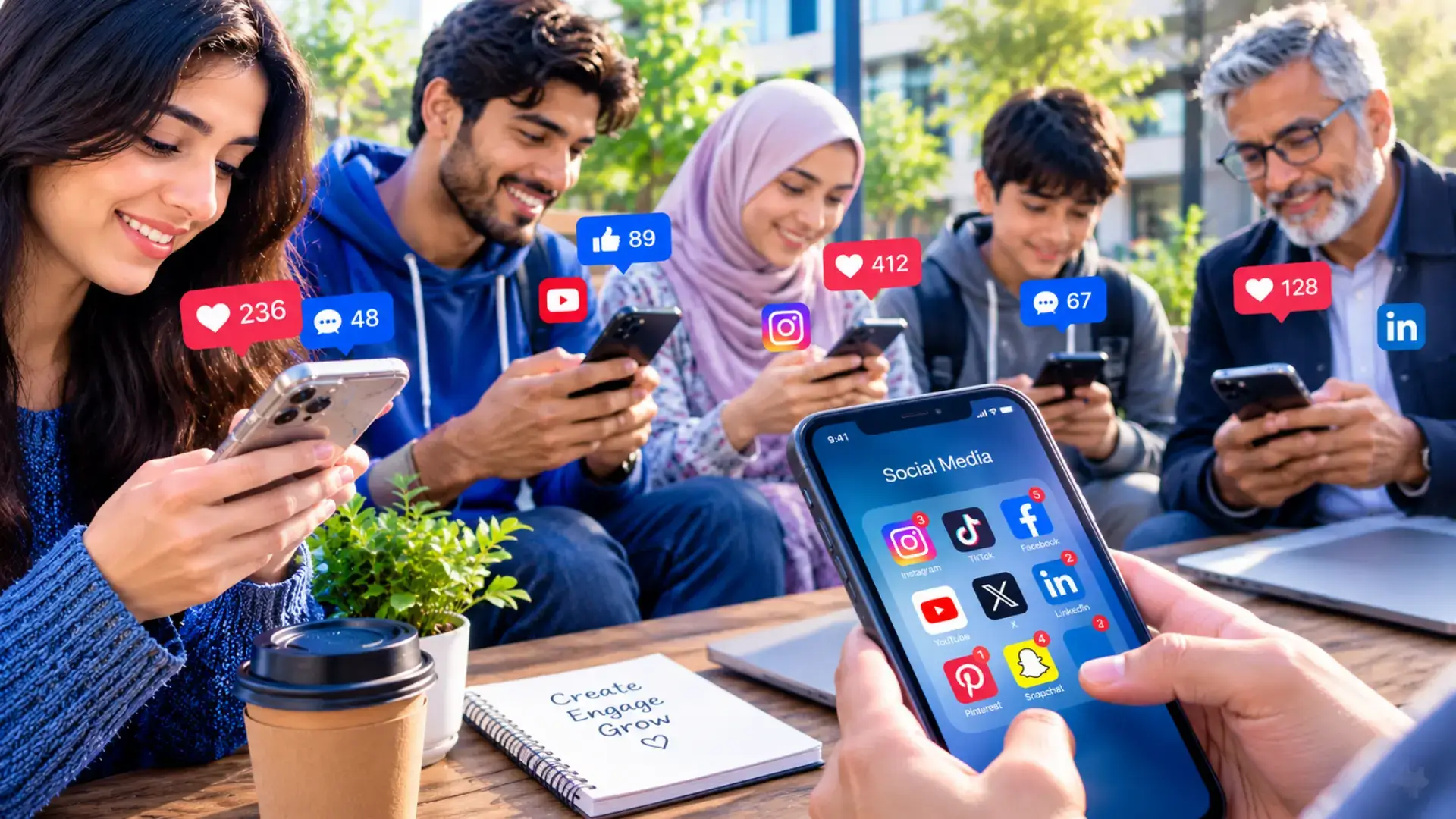
Small businesses now compete with big brands using nothing more than a phone camera and consistency.
Why Social Media is Non-Negotiable for Businesses Today
If your business isn't active on social media, you are missing out on your most valuable asset: attention. And attention, unlike ad budgets, compounds — a well-built audience keeps paying off long after the content was posted.
Consumers no longer trust static billboards or intrusive banner ads. They trust authentic content, video reviews, and brands that communicate directly with them. A single comment reply from a real person can build more brand loyalty than an entire month of polished advertising.
📌 Case Study: Duolingo
Instead of polished corporate posts, Duolingo leaned into unhinged, meme-driven short-form videos starring its owl mascot. The result: one of the most-followed brand accounts on TikTok, built almost entirely on organic engagement rather than ad spend.
Lesson: audiences reward brands willing to sound human and a little unpolished over brands that only broadcast promotions.
A Second Example: The Local Business Playbook
You don't need a mascot or a huge budget to apply the same lesson. Many small restaurants, gyms, and salons have built loyal local followings simply by filming everyday moments — the morning prep, a regular customer's reaction to a new dish, a quick behind-the-scenes tip. None of it looks like an "ad," which is exactly why people watch it, share it, and eventually walk through the door. The pattern is consistent across industries: content that feels like a peek behind the curtain outperforms content that feels like a pitch.
5 Practical Tips to Master Your Social Media Strategy
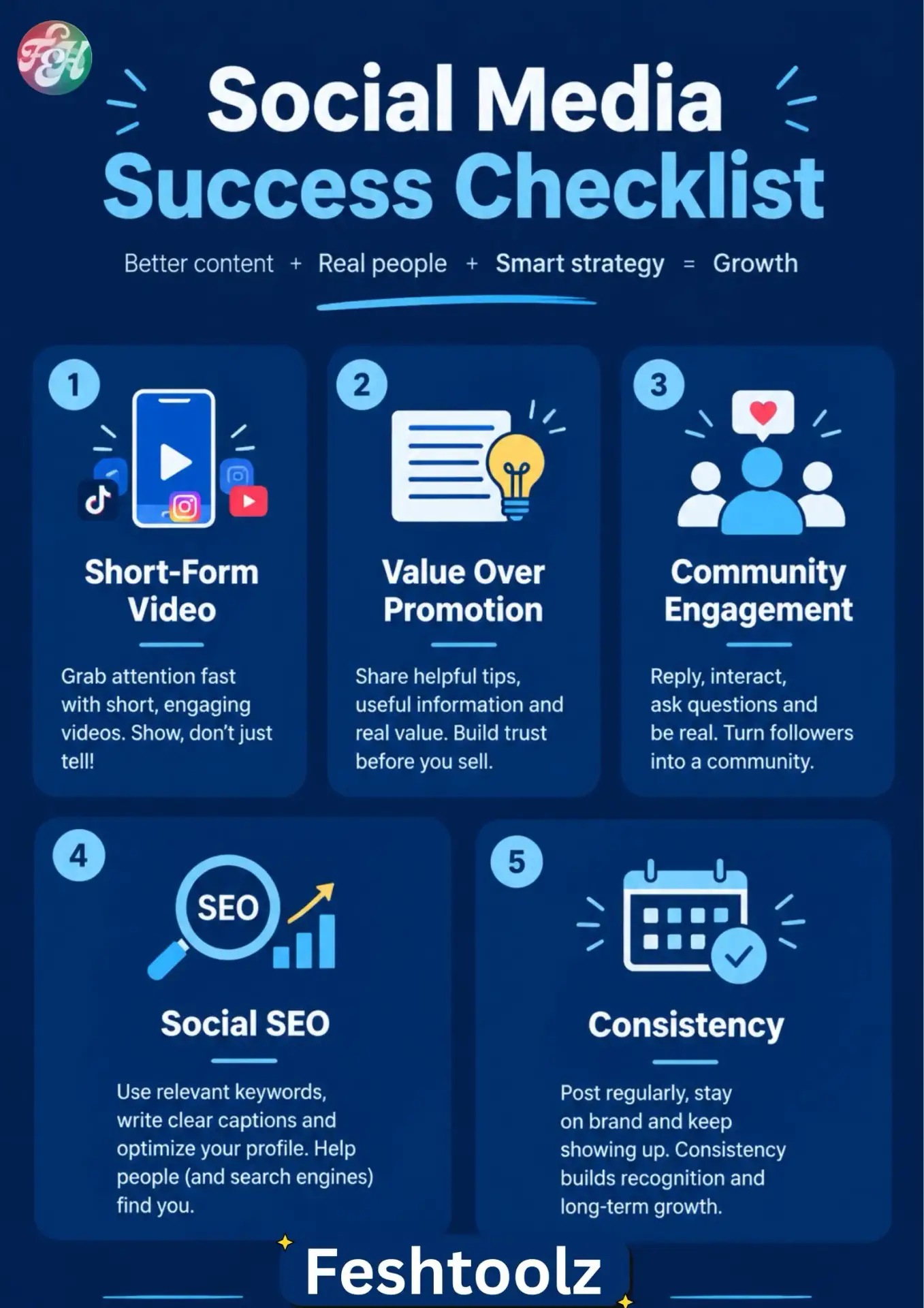
Navigating social media as a creator or brand can feel overwhelming. To cut through the noise, focus on these five core principles:
- Prioritize Short-Form Video — Reels, Shorts, and TikToks offer the highest organic reach. Marketers rank short-form video as their top ROI format, generating roughly 2.5x more engagement than long-form content (see Sprout Social's benchmark report). Grab attention within the first 3 seconds, since that's the window where most viewers decide whether to keep watching or scroll past.
- Focus on Value Over Self-Promotion — Follow the 80/20 Rule: 80% of your content should educate, entertain, or inspire your audience, while only 20% should directly promote your products or services. Audiences can sense when every post is a sales pitch, and they tune it out fast.
- Build Community, Don't Just Broadcast — Social media is meant to be social. Reply to comments, engage with other accounts in your industry, ask questions, and create polls. A brand that replies to comments within the first hour typically sees noticeably higher engagement on its next post, because the algorithm reads that activity as a signal of a healthy, active community.
- Optimize for Search (Social SEO) — Platforms like TikTok and Instagram are increasingly being used as search engines. Include relevant keywords in your captions, on-screen text, and topic tags so the algorithm understands who to show your content to, the same way you'd think about keywords for a Google search.
- Be Consistent, Not Constantly Present — You don't need to post five times a day on every platform. Pick 1 to 2 platforms where your target audience spends their time, and commit to a realistic, consistent posting schedule you can actually sustain for months, not just for one motivated week.
A simple, consistent posting schedule beats sporadic bursts of high effort.
Common Mistakes That Quietly Kill Growth
Most accounts don't fail because of one big blunder — they fail because of small, repeated habits that cap their growth. Here are the ones worth watching for:
- Posting only when it's convenient: irregular posting resets momentum every time, since algorithms favor accounts with predictable activity.
- Ignoring comments: a quiet comment section signals a dead account, even if the video itself performed well.
- Chasing every trend: jumping on trends that have nothing to do with your niche confuses the audience about what you actually stand for.
- Overproducing content: spending days editing one perfect video often performs worse than a rougher video posted the same day it was filmed.
- No clear call-to-action: viewers rarely take the next step on their own — tell them what to do next, whether that's visiting a link, commenting, or sharing.
If writer's block is what's slowing your posting schedule down, tools like the FeshToolz AI Content Creator can turn a bare topic into a ready-to-edit caption or post in seconds.
How to Measure Success: Metrics That Actually Matter
Follower count is the metric most people obsess over, but it's rarely the one that predicts real business results. When reviewing performance, pay closer attention to:
- Watch time / completion rate: shows whether your content actually holds attention, not just grabs it for a second.
- Saves and shares: a stronger signal of value than likes, since people only save or share content they find genuinely useful.
- Comment quality: thoughtful comments and questions indicate an engaged, trusting audience — not just passive scrollers.
- Click-throughs and conversions: the metric that ultimately connects content to revenue, whether that's website visits, DMs, or sales.
Tracking these consistently, even in a simple spreadsheet, will tell you far more about what's working than watching your follower count tick up or down day to day.
What's Next? Emerging Trends in Social Media
Frequently Asked Questions
How often should a small business post on social media?
Quality and consistency matter more than frequency. Three well-made posts a week on one platform will outperform daily low-effort posts spread across five platforms.
Which platform should I focus on first?
Go where your specific audience already spends time. A B2B service business will likely see better results on LinkedIn, while a visual product-based business may do better on Instagram or TikTok.
Do I need expensive equipment to create good content?
No. A recent smartphone with good lighting and clear audio is enough for the vast majority of short-form content that performs well today.
Final Thoughts
Social media is no longer just a digital distraction; it is a vital environment where culture, commerce, and human connection intersect. It rewards brands and creators who show up consistently, communicate like real people, and pay attention to what their audience actually responds to — not just what looks impressive on a highlight reel.
Whether you are using these platforms to build a personal brand, scale a business, or simply stay connected, the goal remains the same: use social media intentionally. Don't just consume the content—create value, build genuine relationships, and leverage the tools available to achieve your goals.
Looking to create high-converting social media content, captions, and SEO strategies effortlessly?
Let FeshToolz help you streamline your content workflow today!
Want to contribute your own perspective? Check out our Write For Us page to get published.