
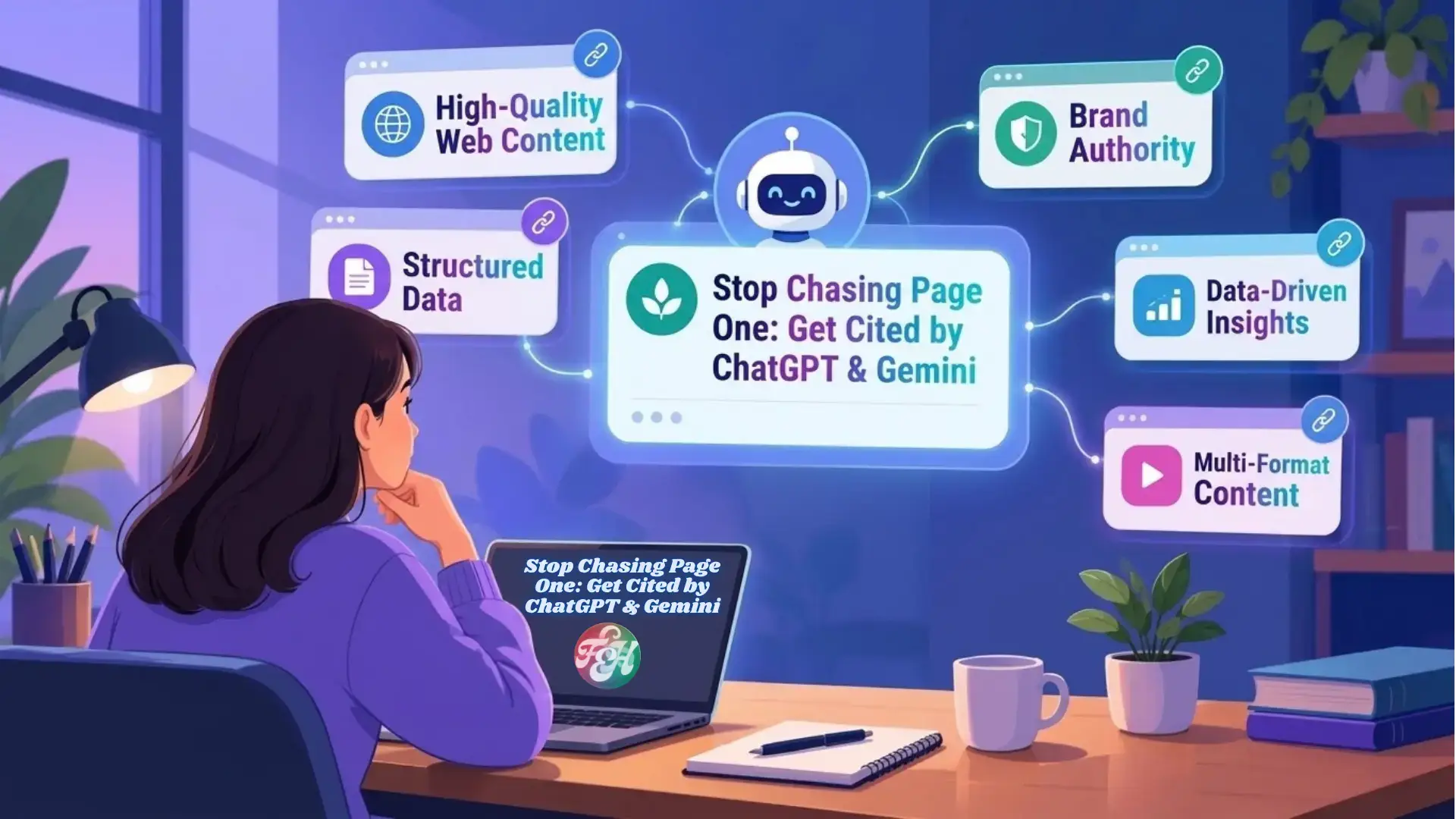
Stop Chasing Page One: How to Get Cited by ChatGPT, Gemini & Google AI Overviews in 2026
Picture this. Someone in Lahore, London or Los Angeles opens ChatGPT and types, "Which agency can help me build quality backlinks?" There's no page two and no ten blue links. There's one calm, confident answer with a few names in it, and a handful of tiny source links tucked underneath.
If your brand is in that answer, a tool that millions of people trust just recommended you. If it isn't, you're invisible, no matter how beautiful your website is.
For twenty years we fought for position one. Now the real prize is the citation: being the source an AI quotes, links or names. I run Fesh Digital Hub, and I work with guest posting, link building, SEO and LLMO (Large Language Model Optimization) every day. This is the most exciting shift I've seen in search, and also the most misunderstood.
Here's how AI systems choose their sources, seven tactics that work, and the mistakes that quietly keep good brands out of the answer.
Why Citations Are the New Rankings
Traditional search rewarded the page that ranked. Generative search rewards the source that helps the AI build a trustworthy answer. That's a different job with different rules.
Here's the twist: these platforms don't even agree with each other. BrightEdge research found that Google AI Overviews, AI Mode and ChatGPT recommend different brands nearly 62% of the time. So there's no single "AI algorithm" to crack. There is a pattern, though. Content that is clear, credible, well structured and widely mentioned tends to win everywhere.
Keep that journalist in mind for everything below.
How AI Decides Who Deserves a Citation
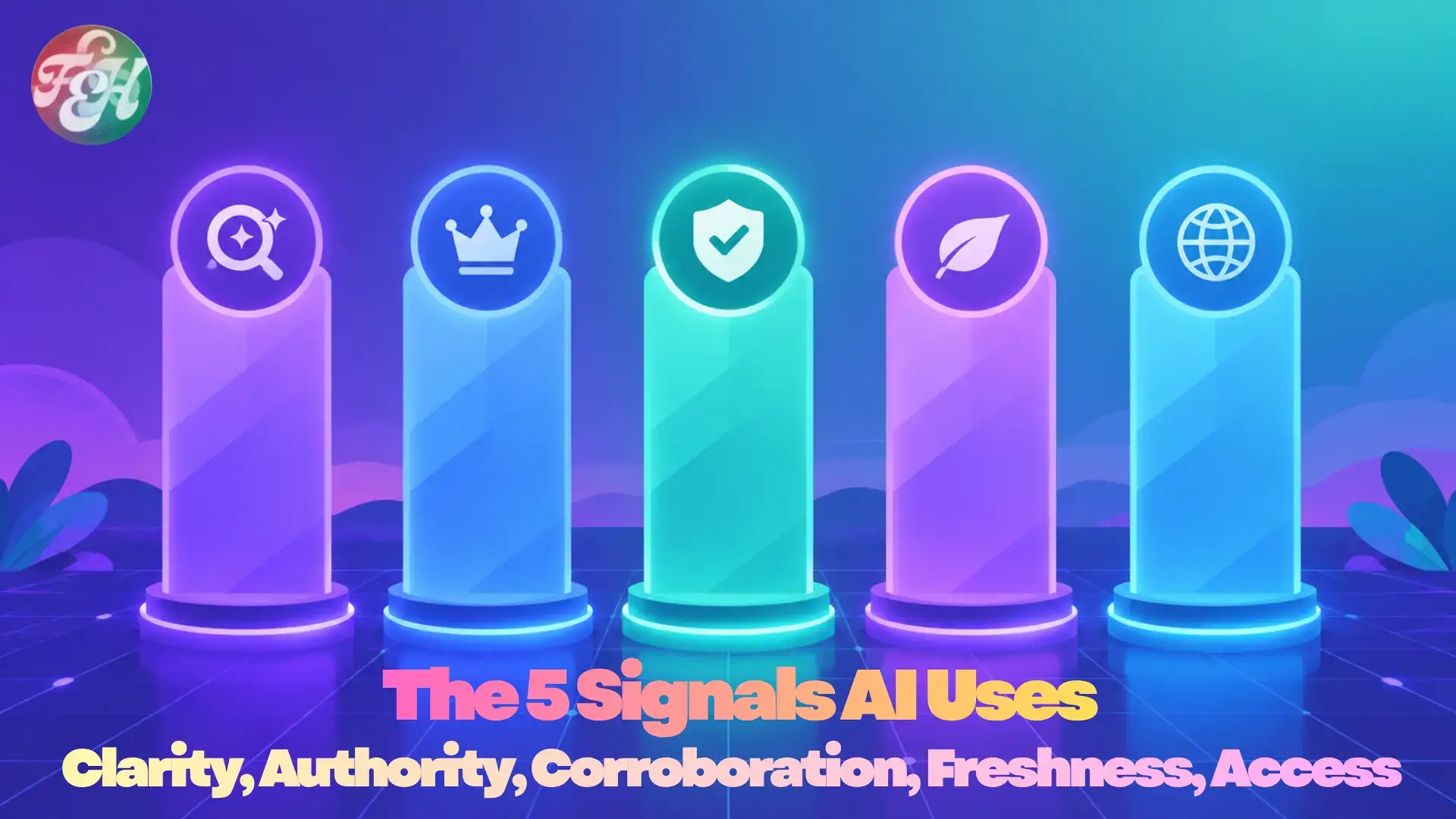
AI systems don't "like" websites the way humans do. They retrieve, compare and assemble. Five signals keep showing up:
1. Clarity. Can a machine lift one clean paragraph from your page and drop it into an answer without editing it?
2. Authority. Is there a real person or brand behind the words, with visible experience?
3. Corroboration. Do other trusted places mention you? An AI is more comfortable citing a source that's confirmed elsewhere, the way a journalist prefers a story two outlets have verified. Established publications are the gold standard of that trust. A Forbes Agency Council article on brand visibility in AI search makes the same point about content that AI tools can read and serve up. And TIME's report on Google rebuilding search around AI shows how fast the search box itself is changing.
4. Freshness. A guide last touched in 2021 is a fossil. Update your best pages.
5. Access. If crawlers can't fetch a page, or Google hasn't indexed it, it doesn't exist as far as AI is concerned.
7 Tactics That Actually Move the Needle
1. Answer first, explain later
Under every important heading, give the direct answer in the first two sentences, ideally 40 to 60 words. Then expand. Don't open with "In today's fast-paced digital world…". Open with something like "Guest posting builds authority by placing your expertise on relevant, trusted websites, earning contextual backlinks and brand mentions." That block is a citation waiting to happen.
2. Write headings the way people ask
"What is LLMO?" beats "Understanding Modern Optimization Paradigms." People talk to AI tools in full, natural sentences, so mirror them. A short FAQ section at the end of your article is cheap and effective.
3. Bring something nobody can copy
The internet is drowning in generic content. What stands out is first-hand experience, small original data, real client lessons and opinions backed by reasoning. If your article could have been written by anyone, it will be cited by no one.
4. Make your identity unmistakable
AI builds a picture of who you are from scattered signals. Keep your name, brand, bio and expertise consistent across your website and social profiles. A strong About page does heavy lifting. Mine lives on my About page, and it's the first place I'd send any reader, or any crawler, to understand who's behind the content. Add author bylines with real credentials to every article.
5. Speak the machine's language
Article, FAQ, Organization and Person schema won't magically guarantee citations. What they do is remove ambiguity, and ambiguity is exactly what AI avoids. Pair them with clean HTML, logical H2 and H3 order, short paragraphs, and tables for comparisons.
6. Open the door for crawlers
Check that your robots.txt isn't accidentally blocking the crawlers you want, keep pages fast and mobile friendly, and confirm your key pages are indexed in Google Search Console. It sounds boring, but it's the reason many great pages never get quoted.
7. Earn mentions beyond your own website
This is the most underrated tactic. AI leans on corroboration, so being mentioned on relevant third-party sites through guest posts, expert quotes, interviews and communities multiplies your chances. That's why I build my guest posting work around relevant, quality placements rather than bulk. If you'd like to contribute, my Write for Us page is open. If you'd rather have someone handle content and outreach for you, my services page explains how I work.
Same Goal, Three Personalities
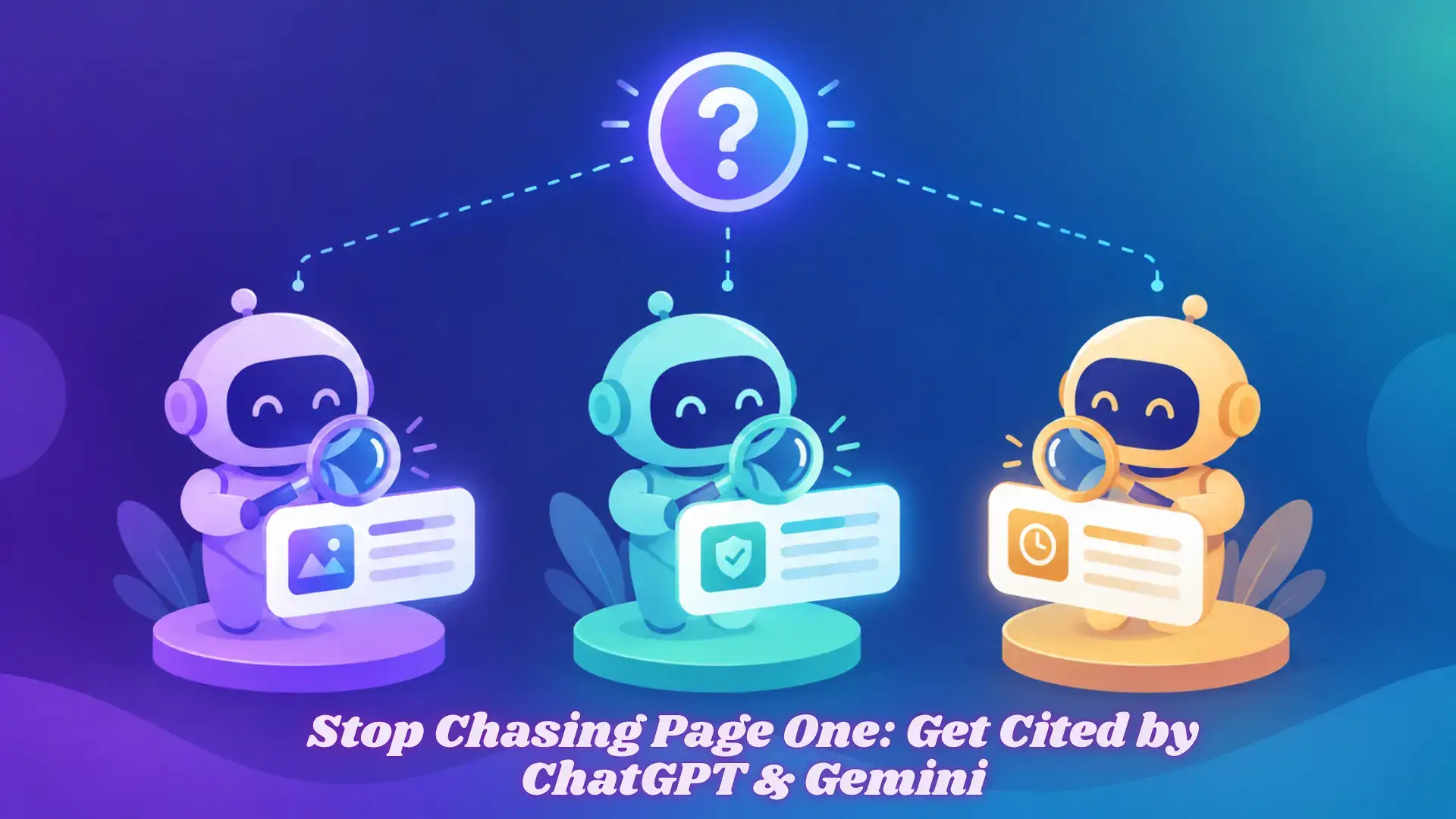
ChatGPT often names brands it already "knows" from training, and it pulls from the live web when it searches. The more your brand is discussed in credible places, the more likely it is to surface.
Gemini and Google AI Overviews are closely tied to Google's own index. Strong classic SEO, E-E-A-T signals (experience, expertise, authoritativeness, trust) and well-structured pages matter a lot here. There's also good news. According to the same BrightEdge study, Google AI Overviews cite brands about 2.5 times more often than ChatGPT, so there are simply more slots to win.
Don't build three strategies. Build one strong foundation of clear answers, real expertise and off-site mentions, then check how each platform responds.
Mistakes That Keep Good Brands Invisible
- Keyword stuffing and AI-bait fluff. Machines notice, and so do readers.
- Publishing raw, unedited AI text. Without a human voice or original insight, you're one more copy in a very crowded room.
- Burying the answer under long intros and pop-ups.
- Never updating. Stale pages lose trust quietly.
- Ignoring off-site presence. Your own website can't vouch for itself.
I Ran This Test Myself, and the Results Surprised Me
Theory is nice, but I wanted proof. So I asked ChatGPT and Gemini the same ten questions my own clients ask, with web search switched on, and compared exactly which brands showed up.
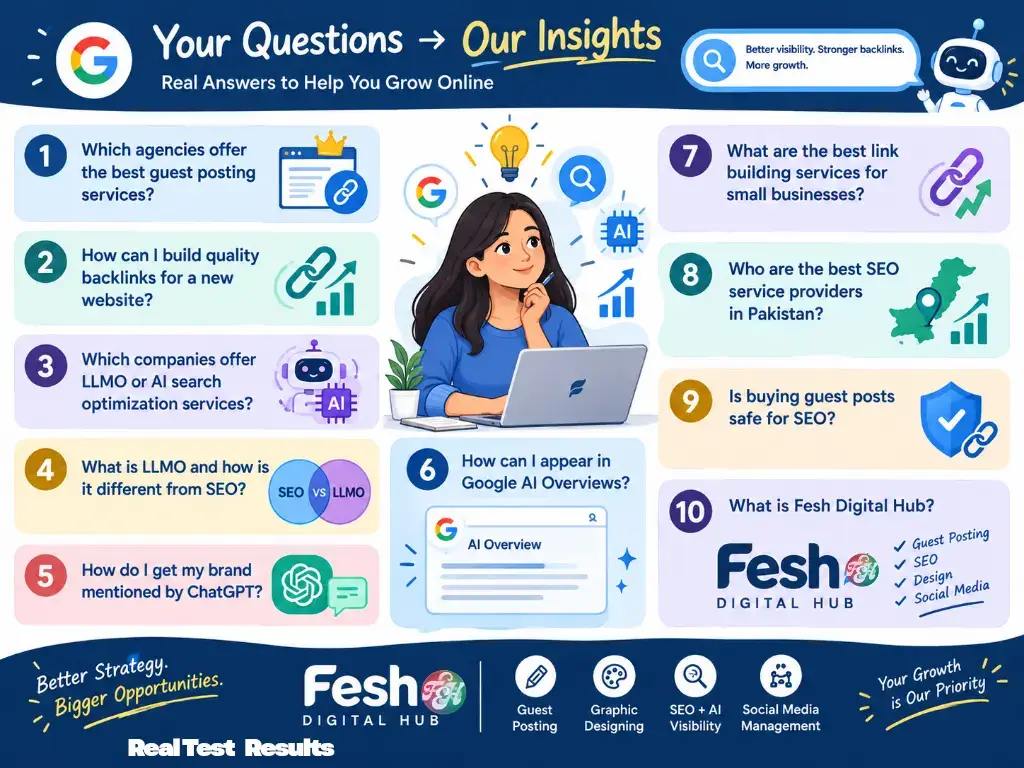
The first thing I noticed backed up the BrightEdge number I mentioned earlier. For "which agencies offer the best guest posting services," Gemini named Siege Media, Page One Power, FatJoe and Loganix. ChatGPT named Rhino Rank, FATJOE, Outreach Monks, Loganix and Stan Ventures. Only two names overlapped. Same question, two different shortlists.
The gap widened on the newer topic. For "which companies offer LLMO or AI search optimization services," Gemini listed Omnius, Digitalike, Aimers and NP Digital. ChatGPT listed iPullRank, First Page Sage and Graphite. Zero overlap. LLMO is so new that even the AI models haven't agreed on who the experts are yet, which honestly is good news for anyone willing to claim that space early.
The most useful finding, though, was about my own brand, and I'll be upfront about it. When I asked "what is Fesh Digital Hub," Gemini answered confidently about a company called "Fresh Digital Hub," describing web development, branding and AI process automation services I don't actually offer. It had the name slightly wrong and the services slightly wrong. ChatGPT, on the other hand, described Fesh Digital Hub and FeshToolz accurately, guest posting, SEO, AI visibility and all.
Neither model recommended Fesh Digital Hub yet for guest posting, backlinks or LLMO services, and for the "best SEO providers in Pakistan" question, Gemini listed other agencies entirely. That's the honest, unglamorous starting point, and it's exactly the gap this article is about closing. If a brand's own name and services can get scrambled by a leading AI model, tactic four above, keeping your identity unmistakable everywhere, isn't a nice-to-have. It's the fix.
If you want to see how a wider set of AI-visibility and LLM SEO agencies compare, Infrasity's roundup of top LLM SEO optimization agencies is a useful outside reference alongside these results.
How to Know It's Working
Keep it simple. Every month, ask ChatGPT, Gemini and Google the ten questions your customers really ask, and note whether you appear. Check your analytics for visits coming from AI tools, and watch branded searches in Search Console. Results rarely show up overnight, so consistency matters more than speed.
Frequently Asked Questions
What does it mean to get cited by ChatGPT?
It means ChatGPT names your brand, links to your page or uses your content as a source when it answers a question.
Is SEO still important for AI citations?
Yes. Google's AI features draw on Google's index, so fast, indexed, well-structured pages remain the foundation. AI visibility builds on SEO rather than replacing it.
How long does it take to get cited?
There's no fixed timeline. Clear answers, regular updates and quality mentions on other sites build trust gradually, so think in months, not days.
The Bottom Line
The brands that get cited won't be the loudest. They'll be the clearest, the most credible and the most talked about in the right places. Start small. Rewrite one important page with a direct answer at the top, sharpen your About page, and earn one quality mention this month. That's how a citation starts.
Visit my services page or pitch a guest post through Write for Us. You can also email me at feshdigitalhub@gmail.com.
#GuestPosting #LinkBuilding #SEO #ContentMarketing #AIContent #DigitalMarketing #LLMO #FeshDigitalHub